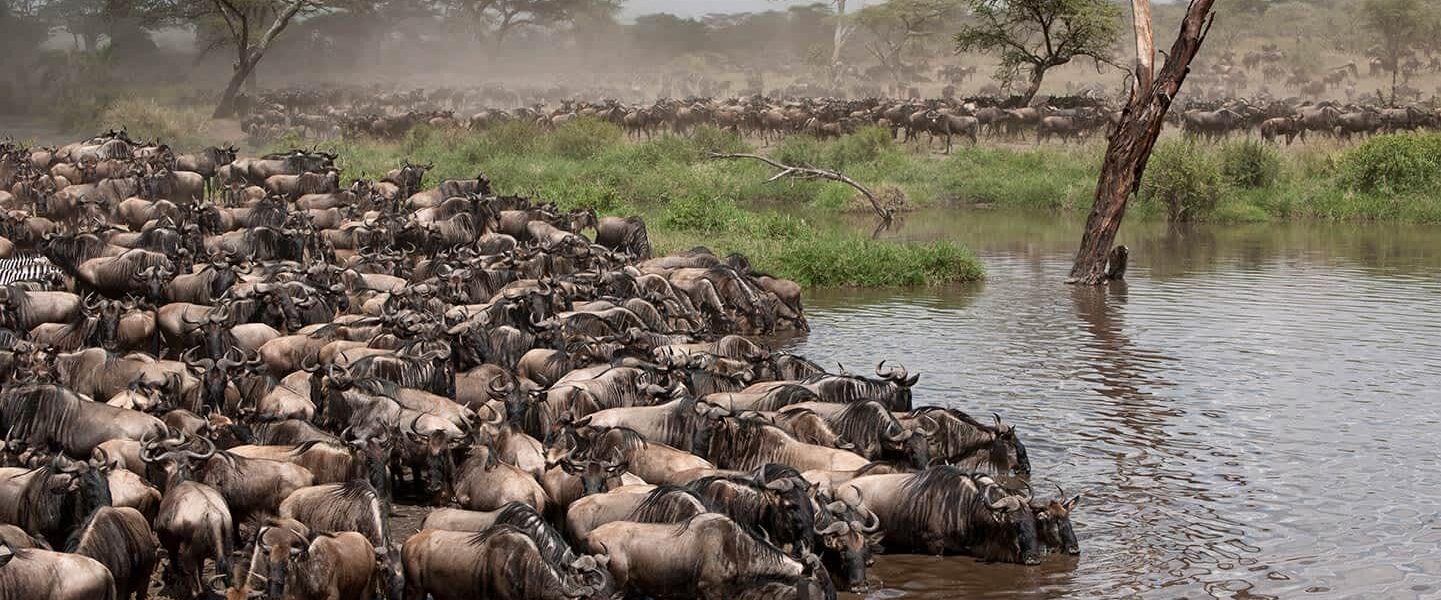
January — Calving Season Begins

Serengeti Great Migration January: Calving Season in Serengeti
- Location: Southern Serengeti / Ndutu
- Thousands of calves born daily
- High predator action
photographers, wildlife lovers
During the Serengeti Great Migration, photographers capture breathtaking moments.
February — Peak Calving Season

- Peak births
- Massive predator activity
- Best for dramatic wildlife scenes
March — Movement Begins

- Herds begin moving
- Lush green landscapes
- Fewer tourists
April — Low Season (Hidden Gem)

Explore the routes of the Serengeti Great Migration.
- Rainy season
- Lower prices
- Great photography
May — Large Herd Movement

- Massive herd buildup
- Movement toward central Serengeti
June — Western Corridor Action

- Grumeti River crossings
- Predator-heavy
- Start of dry season
July — Northern Movement Begins

- Movement north
- Early Mara River crossings
- Peak season begins
August — Peak River Crossings

- Best-known migration period
- Dramatic crossings
- High demand
September — Prime Safari Month

- Continued crossings
- Excellent wildlife
- Slightly fewer crowds than August
October — Return Movement

- Herds begin moving south
- Transition period
November — Short Rains

- Fresh grass growth
- Herds spread out
December — Southern Return

- Return to southern plains
- Calving cycle begins again
Planning a migration safari isn’t just about dates—it’s about positioning, timing, and logistics.
Speak directly with a local safari expert and get a custom plan based on:
- Your travel dates
- Your budget
- Current migration movement
💬 Start planning on WhatsApp: https://wa.me/+255784737413
📩 Request your custom safari itinerary
Frequently Asked Questions About the Great Migration (January–December)
Where is the Great Migration in January?
In January, the herds are usually in the southern plains of the Serengeti National Park, especially around Ndutu. This is the start of calving season, when thousands of wildebeest give birth.
Where is the Great Migration in February?
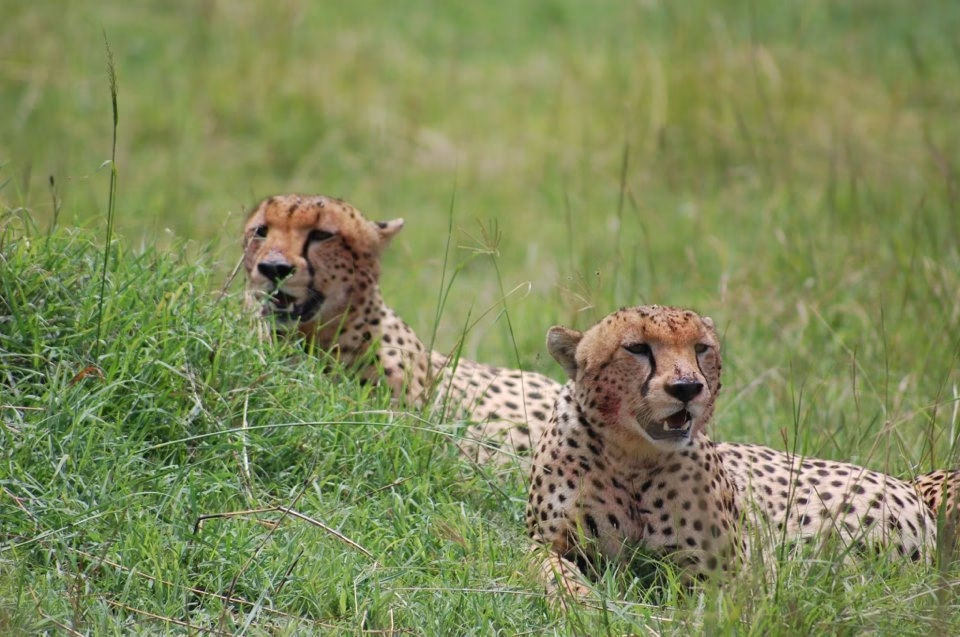
In February, the migration remains in the southern Serengeti. This is peak calving season, with high predator activity as lions and cheetahs hunt newborn calves.
Where is the Great Migration in March?
In March, the herds begin to move slowly west and north as the rains continue. The landscape is green, and wildlife is still widely spread.
Where is the Great Migration in April?
In April, the migration is usually in central and southern Serengeti during the rainy season. Fewer tourists visit at this time, but the scenery is lush and beautiful.
Where is the Great Migration in May?
In May, large herds gather and begin moving toward central Serengeti and the western corridor. This is when you start to see long columns of migrating wildebeest.
Where is the Great Migration in June?
In June, the migration moves into the western corridor of the Serengeti, especially near the Grumeti River. This is a great time for predator sightings and possible river crossings.
Where is the Great Migration in July?
In July, the herds move north toward Northern Serengeti and the Mara River area, near the Masai Mara National Reserve. Early river crossings may begin.
Where is the Great Migration in August?
In August, the migration is concentrated in Northern Serengeti and Maasai Mara. This is peak river crossing season, with dramatic crossings and high wildlife density.
Where is the Great Migration in September?
In September, herds remain in the northern Serengeti and Maasai Mara. River crossings continue, and wildlife viewing is excellent.
Where is the Great Migration in October?
In October, the migration begins moving south again from the north. This is a transition period as the herds follow new grazing areas.
Where is the Great Migration in November?
In November, the short rains begin, and the herds move further south into central Serengeti as fresh grass grows.
Join guided tours for the Serengeti Great Migration.
Where is the Great Migration in December?
In December, the migration returns to the southern Serengeti plains, completing the cycle and preparing again for the calving season.
Plan your trip around the Serengeti Great Migration.
What is the best month to see the Great Migration?
There is no single “best” month. It depends on what you want to see.
- January–February: calving season
- June–July: movement and predator action
- August–September: river crossings
Can the Great Migration be predicted exactly?
No. The migration is a natural movement and depends on rainfall, grass conditions, and wildlife behavior. Locations can shift slightly each year.
Many tourists flock to witness the Serengeti Great Migration.
How many days do I need to see the Great Migration?
It is recommended to spend at least 3–5 days in Serengeti to increase your chances of seeing key migration activity.
Is the Great Migration worth it?
Yes. The Great Migration is considered one of the most spectacular wildlife events in the world, with over a million animals moving across the Serengeti ecosystem.
How much does a Great Migration safari cost?
Costs vary depending on the season and level of comfort:
- Mid-range: $350–$700 per person per day
- Luxury: $700–$1,200+ per person per day
Secure your spot for the Serengeti Great Migration.
Witness the wild beauty of the Serengeti Great Migration.
Join experts to learn about the Serengeti Great Migration.