Menu
Ultimate Guide to Responsible Kilimanjaro Adventures

Ultimate Guide to Responsible Kilimanjaro Adventures

We Are Officially Certified: Ultimate Guide to Responsible Kilimanjaro Adventures. Get Ready for the Ultimate Genuine Climbing Experience to Kilimanjaro and Beyond

Nature Bound Africa (NBA) is proud to announce a major milestone in our commitment to ethical travel: we are now officially certified for responsible climbing on Mount Kilimanjaro. This certification not only reinforces our dedication to sustainable tourism but also ensures that every trekker who climbs with us contributes to the well-being of local communities and the preservation of Tanzania’s natural wonders.

What Responsible Climbing on Kilimanjaro Really Means

When we talk about responsible Kilimanjaro trekking, we’re referring to a deeply rooted philosophy that goes far beyond reaching the summit. It’s about:

    • Supporting local porters with fair wages and ethical working conditions.

    • Minimizing environmental impact on the mountain’s fragile ecosystems.

    • Respecting indigenous cultures and communities along the route.

    • Ensuring safety and preparedness for every climber.

Our certification aligns with globally recognized guidelines for sustainable mountaineering. By choosing a certified operator like Nature Bound Africa, you’re directly contributing to ethical tourism practices and protecting one of Africa’s most iconic peaks.

Why Climb Kilimanjaro with a Certified Responsible Operator?

If you’re considering a Mount Kilimanjaro expedition, the operator you choose matters. Here’s how our certified approach enhances your experience:

    • Ethical Pottering: Too often, porters are overworked and underpaid. We proudly follow KPAP (Kilimanjaro Porters Assistance Project) guidelines, ensuring our support staff is treated with dignity and respect. Your journey is made possible by their strength—treating them well is non-negotiable.

    • Sustainable Trekking Routes: From Machame to Lemosho and Rongai, we guide you through less-crowded paths that showcase Kilimanjaro’s diverse landscapes while reducing environmental strain. We practice Leave No Trace principles, pack out all waste, and use eco-friendly gear.

    • Safety First: As a certified company, we maintain rigorous safety protocols. Our mountain guides are wilderness first-aid certified, and we conduct twice-daily health checks for all climbers. We never compromise on your well-being at high altitude.

Extend the Adventure: Safari in the Serengeti and Beyond

After conquering Africa’s highest peak, there’s no better way to unwind than with an authentic safari experience in Tanzania. Our itineraries take you deep into the heart of Serengeti National Park, where the Great Migration thunders across the plains.

Whether you want to witness a pride of lions at dawn, watch elephants wander the Ngorongoro Crater, or explore the lesser-known Tarangire and Lake Manyara parks, our safari experts craft journeys that blend comfort, conservation, and culture.

Why Choose Nature Bound Africa?

At Nature Bound Africa (NBA), we believe in more than just travel—we believe in transformational experiences that leave a positive footprint. When you travel with us, you support:

    • Certified responsible mountain trekking.

    • Locally led, expert-guided safari adventures.

    • Eco-conscious accommodations and transportation.

    • A deep respect for Tanzanian culture, wildlife, and ecosystems.

Choose The Best Mount Kilimanjaro Climbing Packages

Start Planning Your Adventure Today

Your unforgettable Tanzanian journey is just a message away. Whether it’s summiting Mount Kilimanjaro or exploring the raw beauty of the Serengeti and the savanna plains of Masai Mara, we’ll help you create memories that last a lifetime.

📩 Email: info@natureboundafrica.com

🌐 Website: www.natureboundafrica.com

Responsible Climbing. Real Safaris. Remarkable Memories. Experience Tanzania the right way—with Nature Bound Africa (NBA).

Accessibility for Travelers with Disabilities

Accessibility for Travelers with Disabilities

At Nature Bound Africa, we believe the wonders of the East African wilderness should be accessible for Travelers with Disabilities / to everyone. We specialize in organizing “Inclusive Safaris” that cater to travelers with physical disabilities, mobility challenges, or sensory needs.

Our Approach to Accessible Travel:

  • Customized Itineraries: We don’t believe in “one size fits all.” Every accessible trip is built from the ground up, selecting routes and parks (like the flatter terrains of the Serengeti and Tarangire) that are most comfortable for wheelchair users.
  • Handpicked Accommodations: we partner with a curated network of luxury and mid-range lodges that feature universal design, including ground-floor rooms, wide doorways, ramps to communal areas, and roll-in showers with grab bars.
  • Adapted Transportation: Upon request, we provide modified 4×4 safari vehicles. These vehicles can be equipped with ramps or electronic lifts and feature secure anchoring systems so that travelers can remain in their wheelchairs during game drives if they prefer.
  • Trained Support Staff: Our guides receive specialized training in assisting travelers with disabilities. They are experienced in providing physical support during transfers and are sensitive to the pace and specific requirements of guests with limited mobility.
  • Beach Accessibility: For Zanzibar extensions, we select resorts with paved pathways and can arrange for beach wheelchairs to ensure our guests can enjoy the Indian Ocean comfortably.

Interesting Fact: We are one of the few local operators in Arusha that provides a dedicated “Accessibility Coordinator” during the planning phase to verify every lodge’s specific measurements (door widths, ramp inclines) before your arrival.

Warthog

Warthog

Today’s Wildlife Wednesday is Warthog Friday!

In the bush beauty stakes the warthog has suffered a raw deal: a head that is disproportionately big for the body, wart-ish lumps on either side of the face and jaw, a mostly bald body, the spine distinctly bristled and giving way to a tassle- mounted tail. There is something to be said for this unmistakable feature; the tail is always held high and visible to the rest of the group on the move.

There is nothing graceful about their springy trot and when threatened by lion or leopard, they go into reverse at high speed sharp lower tusks to the fore, and until they find a hole to roll into. Relatively myopic as they are a highly developed sense of smell and acute hearing come in handy.

The warthog’s healthy survival rate is perhaps testament to this effective defense. Significant also to survival is the pig’s capacity to live without water for several months. They snuffle around on caloussed knees searching for roots and insects.

The boars keep to themselves, the sows and piglets stick to their own nursery group. This is with the obvious exception of the mating season when bloody battles are fought: a muscle-bound 250 pound hog will compete ferociously for a sow or two.

It compensates somehow that they are generally thought of as intelligent, also adaptable and explorative non-territorial creatures. But it does remain a puzzle why they have four toes but only ever get about on two.

Essential Sustainable Travel & Luxury Packing List

Essential Sustainable Travel & Luxury Packing List

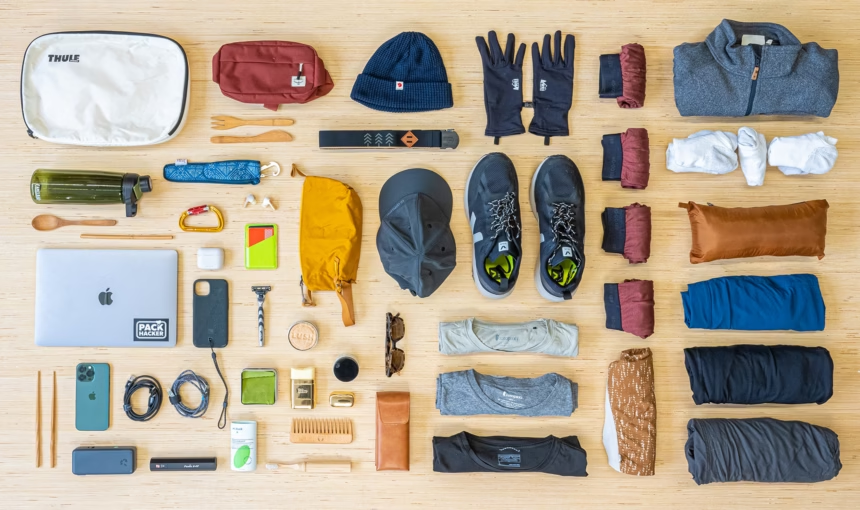
Packing sustainably is a critical first step for a responsible African safari. By choosing the right Essential Sustainable Travel & Luxury Packing List items, you reduce your environmental footprint and enhance your experience in the bush. 

Essential Sustainable Travel & Luxury Packing List

Documents & Essentials

  • Passport and Visas: Ensure all travel documents are up-to-date and carry physical copies as well as digital backups.
  • Travel Insurance: Comprehensive travel and medical insurance details are mandatory.
  • Health Items: Vaccination certificates (if required), personal prescription medications, and a basic first-aid kit.
  • Currency: A mix of local currency and US dollars (widely accepted for tips).
  • Luggage: A soft-sided duffel bag is best, as light aircraft flights between camps have strict weight limits (often 15-20kg or 33-44 lbs total) and cannot accommodate hard suitcases. 

Clothing 

The key is neutral, lightweight layers in natural fabrics to blend in with the environment, which is especially important for walking safaris. 

  • Colors: Khaki, olive, beige, tan, and grey are ideal. Avoid bright colors, white (shows dust easily), and dark blue/black (attract tsetse flies). Avoid camouflage prints, as they are illegal for civilians in some African countries.
  • Tops: 2-3 short-sleeved shirts/T-shirts and 2-3 long-sleeved shirts (for sun and insect protection).
  • Bottoms: 2 pairs of long trousers (convertible zip-off pants are a great space-saver) and 1 pair of shorts.
  • Outerwear: A lightweight fleece or warm jacket for chilly mornings and evenings, and a light waterproof rain jacket/poncho.
  • Other:
    • 5-7 pairs of socks and underwear (many lodges offer laundry service, so you don’t need a pair for each day).
    • Swimsuit for lodge pools.
    • A ‘smart casual’ outfit for evening dinners, as some luxury lodges have dress codes. 

Footwear

  • Walking Shoes: One pair of comfortable, broken-in closed-toe walking shoes or light hiking boots for game walks.
  • Casual Shoes: One pair of sandals or flip-flops for use around the camp or by the pool. 

Eco-Friendly Gear & Accessories

  • Reusable Water Bottle: Essential for staying hydrated and avoiding single-use plastic bottles, which are banned in some African countries like Tanzania and Kenya.
  • Eco-Friendly Toiletries: Use solid shampoo/conditioner bars or bring liquids in reusable, leak-proof travel bottles. Opt for biodegradable products when possible, as shower water often drains into the soil.
  • Sun Protection: A wide-brimmed sun hat, polarized sunglasses, and high-SPF, reef-safe sunscreen and lip balm.
  • Insect Repellent: Repellent with DEET is highly effective, or you can opt for natural, DEET-free alternatives.
  • Daypack: A small, soft-sided backpack is perfect for carrying essentials on game drives.
  • Technology:
    • Binoculars (one pair per person is recommended for optimal wildlife viewing).
    • Camera with a good zoom lens, extra batteries, and memory cards.
    • Power bank/portable charger (solar-powered options are great for eco-camps with limited electricity).
    • Universal power adapter (Type G is common in Tanzania).
  • Extras: A scarf or buff to protect your face from dust, a headlamp or small flashlight, and a journal to document your experiences. 

By following these guidelines, you’ll be well-prepared for your adventure with Nature Bound Africa while minimizing your impact on the beautiful African wilderness. 

💬