A Guide to Tanzania and Zanzibar Holiday
The idea of this guide is to help you decide where in Tanzania you should go. We know that clients can easily get bamboozled by too much information. We hope this short guide will be enough to set you on the right course. It is not too detailed. Hence, it is not meant to be definitive. For further details, we recommend visiting our vast website. It discusses all the national parks, beaches, and islands. You will find information on hundreds of different lodges, all with in-depth reviews, prices, and often videos. Since we have personally visited every lodge in Tanzania we can really give you the best advice!
So saying, nothing beats the personal touch. We strongly recommend you either pop into our offices in Arusha, Tanzania or Nairobi Kenya. Alternatively, you can phone to discuss. We can also give you a ‘virtual presentation.’ This only requires that you have access to a computer anywhere in the world!
Important considerations
When to go
The climate in Tanzania is equatorial, with little seasonal variation in temperature, but rainfall does vary considerably. The best time to travel is July to October. Tanzania is hot, dry, and sunny with low humidity during this period. The game viewing is great. The short rains come in November. The long rains occur in April and May. In between the rains, from December to March, is another good time to travel.
Where to stay?
The next consideration is which park will offer the best game viewing and activities for your travel dates. This decision is especially critical if you want to witness The Great Migration. Each park offers a variety of accommodations. You can choose based on your budget and personal taste. Options include mobile camps, small tented camps, permanent lodges, and large hotels. Tented camps can still be extremely luxurious. These camps often have private plunge pools and all the bells and whistles. Nonetheless, the semi-permanent mobile camps that track the path of the migration lack permanent plumbing.
Budget and timings
Safaris are not cheap. Although the beach hotels are considerably cheaper than the safari lodges, they are still quite expensive. These prices are high compared to other beach locations, such as those in Asia. In the South of Tanzania, safari lodges tend to cost between $450 and $1,000. In the North, they range from $750 to $1,500. Beach hotels generally cost between $200 and $600. All prices are in US dollars per person per night. Safaris are tiring. We only recommend spending up to about a week on safari.
Special occasions
Whether it’s your honeymoon, holiday of a lifetime, birthday celebration, or a family reunion, we will plan it with you. We will guarantee that it is a memorably superb trip. You can go hot-air ballooning over the plains of the Serengeti. Dive with whale sharks. Track lion on foot. Charter your private jet. Simply relax on a private island. Whatever your dream, we can make it happen.
Tanzania is wonderful for romantic holidays and honeymoons for so many reasons. It is one of the easiest countries in Africa to mix a first-class safari. You can also enjoy beach time on an idyllic Indian Ocean island. Its assorted highlights can be easily joined in a neat itinerary with minimal flying time.
Tanzania Overview
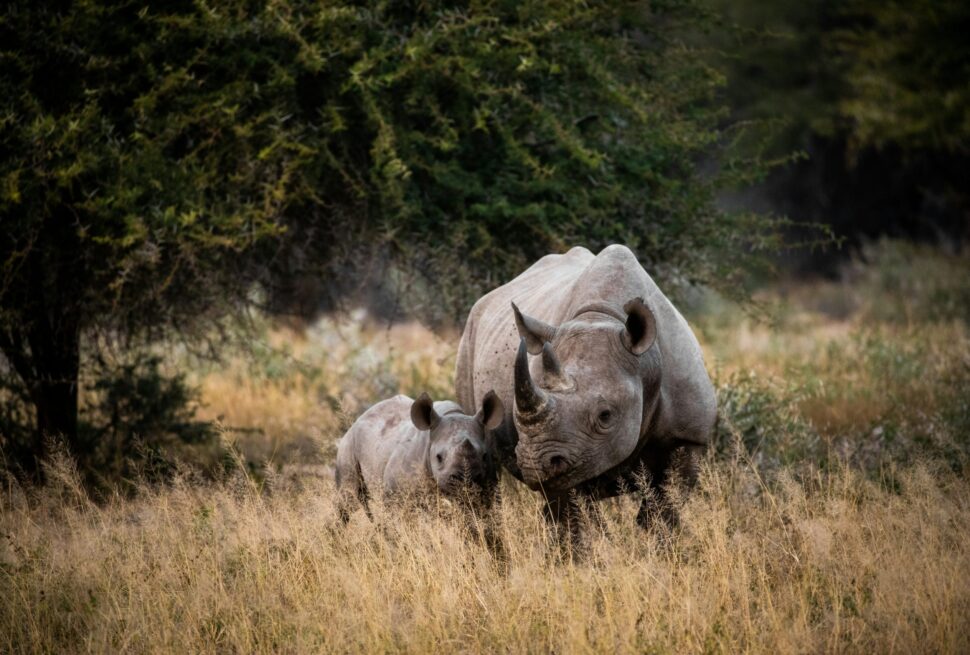
The National Parks and Reserves of Tanzania are the best in Africa for wildlife viewing. Most people choose to explore them for at least part of their stay. Most clients take their safari in either the parks of the North (Serengeti, Ngorongoro Crater, Manyara, Tarangire). Others choose the lesser-known parks of the South (Selous, Ruaha, Katavi, Mahale). The pros and cons of each are discussed below. Most visitors to Tanzania end their time at a beach lodge on one of Tanzania’s islands. Zanzibar is the most common choice. Others opt for lodges on Tanzania’s Indian Ocean coastline.
Dar es Salaam is the main hub. It is served by several airlines from Europe, including KLM (Delta), Swiss, and Emirates. But, British Airways does not serve this hub. If you can’t get to Dar directly the next best hub is Nairobi, both which is accessible with many airlines. It is also worth noting that KLM fly directly to Kilimanjaro, which can save a flight up from Dar.
There is a good western-owned network of flights. They connect all the parks and islands with main hubs in Arusha, Dar, and Zanzibar. This makes traveling within Tanzania a breeze. As a very rough rule of thumb, you should assume $200 per flight. Except for Katavi and Mahale, there are several flights a day between the parks, hubs, and islands.
Further afield
For other beaches, it is worth mentioning the islands in the Quirimbas archipelago of Northern Mozambique. These islands are a short (though expensive) flight from Dar. They offer a truly ‘barefoot luxury’ experience. Visitors can explore amazing untouched reefs. The islands have a real frontier feel. Mauritius and the islands of the Seychelles can be reached via Nairobi. This often involves a ‘dead night’ in a city hotel.
The other countries of East Africa are a short hop from Dar. This allows good combinations with the Masai Mara in Kenya. You can also go Gorilla trekking in Rwanda, etc. Southern Africa can be accessed via Johannesburg. There are daily flights from Dar. Additionally, flights to Victoria Falls are available a few times a week via Nairobi.
Northern or Southern Tanzania?
The big decision is: safari in the North or the South of Tanzania, and how long to spend on safari? The South of Tanzania is far less visited than the parks of the North. The most popular parks are Selous and Ruaha. This region allows short or extended walking safaris. You can also enjoy safaris by boat, as well as safaris by open-sided vehicle. The parks have small (usually tented) lodges which are better value than the tented lodges of the north. Selous is cheap and easy to access because of the short distance. It’s perfect for a short (3 to 4 nights) and reasonably priced safari. For those looking for a longer safari in the South, the combination and contrast of Selous and Ruaha is superb.
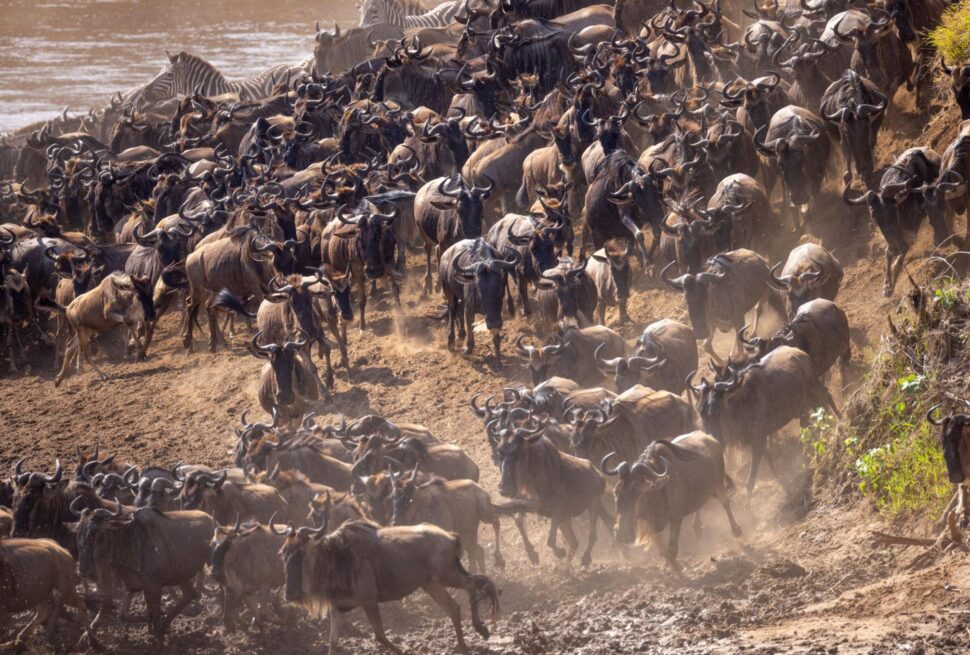
The North of Tanzania is much more visited than the South. The most popular parks are the Ngorongoro Crater and the Serengeti. You can escape the crowds by heading to the far North of the Serengeti. Otherwise, you will see many other safari vehicles. The annual migration of the wildebeest in the Serengeti is justifiably one of the most spectacular sights on the planet. It is visible year round in the Serengeti. The Serengeti is also one of the best parks in Africa in which to see the cats. Though very crowded, the Ngorongoro Crater is one of the seven natural wonders of the world. Price-wise the North is about 50% more expensive than the South and the flights are longer and more expensive. Not all the North camps offer walking safaris. Additionally, it is not possible to do a boat safari.
Safaris are expensive and tiring. They often involve long days in a land cruiser starting before dawn. Most clients take a short 3 to 4 night safari in the South. Others opt for a 5 to 8 night safari either in the North or South. Longer safaris are possible but the experience can get repetitive.
The North of Tanzania
The iconic Serengeti National Park, the Ngorongoro Crater, and the Great Migration are all to be found in the North. Together, they include most people’s idea of ‘safari’. Mount Kilimanjaro is also located in the North. Still, plenty of tourists visit too. As a result, prices are higher than in the South. It can be harder to achieve the authentic African wilderness experience. Activities in the North are constrained by National Park regulations. Night drives, walking safaris, and fly camping are not permitted. Nonetheless, there are exceptions in some camps, as with all rules.
The Serengeti is justifiably famous for its huge concentrations of game, especially predators. Most people spend the majority of their time there. The area is also renowned for the migration all year round. Huge expanses of short grass plains make game viewing exceptionally good. There are 4 main regions. These are the North, the Western corridor, the Central Serengeti, and the Ndutu Plains. Where you stay will depend on the time of year. Several operators offer mobile camps that track the migration – please see our animating map.
The Ngorongoro Crater is diverse and unique. Though a ‘must see’, it is surprisingly small. Most people find that one day there is quite enough. You can’t avoid seeing many other vehicles, often bumper to bumper. The key decision is whether to stay on the rim of the Crater itself. You choose one of the cheaper options like large hotels, Sopa or Serena. Another choice is the beautiful Entamanu. Alternatively, consider the expensive but heralded Ngorongoro Crater Lodge. All boast fabulous views. Your other choice is to stay half way between Manyara and the Crater. This area is called Karatu and features rolling hills and rich culture. Stay in a hotel like Plantation Lodge or Ngorongoro Farm House. It is less busy and allows for more activities, including visits to local villages.
Tarangire is a great park in season (July to October), especially for elephants, though it is plagued by tsetse flies. Lake Manyara is a small national park worth visiting only for a morning en-route to somewhere else.
Where to stay As mentioned, the lodges in the North are more expensive than those in the South. At the top of the scale, you can find lodges like the Crater Lodge and Sasakwa. They cost about $1,600 per person per night. Most of the good camps cost between $800 and $1,000. This includes Faru Faru, Sayari, Olakira, Nomads, Oliver’s, and Serengeti Under Canvas. In this price bracket are mobile tented camps like Olakira. There are also permanent tented camps like Sayari. Additionally, there are permanent lodges like Klein’s. It is hard to find any tented lodges cheaper than this. Fantastic value options, though, include Kirurumu, Chaka, and Kiota. You can take ‘drive-in’ itineraries where lodges do not have their own vehicles for about $600 for 2 people. The price is $500 for 4 people. The camps here are not as atmospheric as our other suggestions. They are also not of the same quality. Still, they are great for budget travelers. See Kati Kati Tented Lodge.
The South of Tanzania
Selous and Ruaha would need longer. The South of Tanzania includes Selous Game Reserve and Ruaha National Park. Each is very different from the other. Both offer outstanding game viewing and a fabulous safari experience. Fewer visitors here mean lower prices (in the region of $400-$700 per person per night). You get better value for money. There are plenty of isolated wildernesses where you won’t see another person.
As the Selous is a game reserve rather than a national park, a wider range of activities is available. These include walking and boating safaris. Visitors can also enjoy game drives in open-sided vehicles and fly camping. The parched red earth of Ruaha is a perfect contrast to the green and watery Selous. Even fewer visitors make it to Ruaha than to the Selous. Ruaha also offers game drives in open-sided vehicles. You can enjoy fly camping and walking safaris as well. The South is always fly-in/fly-out. It is ideal for a short 3- or 4-night safari. Visiting both Selous and Ruaha would need longer.
The parched red earth of Ruaha is a perfect contrast to the green and watery Selous. – Its parched red earth landscape contrasts with the green and watery Selous. Even fewer visitors make it to Ruaha than to the Selous. Ruaha offers game drives in open-sided vehicles. It also provides opportunities for fly camping and walking safaris.
Further West
Very few people venture further to the West of Ruaha. Thus, we do not devote much space to the next two parks. First up is Katavi National Park. It is a huge wilderness with vast plains, akin to the Serengeti. There are huge herds of buffalo. Many prides of lion roam there. And finally on the shores of Lake Tanganyika, Mahale Mountains National Park is a unique location. One can trek with chimps in the morning. In the afternoon, it’s possible to snorkel and sunbathe on the lake.
Where to stay
The cheapest good tented lodges are (Lake Manze in Selous and Mdonya Old River in Ruaha). Their rates are around the $400 mark. Others include (Siwandu in Selous and Jongomero in Ruaha), as well as Mwagusi in Ruaha. These are around the $600 mark. At the very top are lodges like Beho Beho and Sand Rivers. Both are in Selous. Greystoke in Mahale is also at about $1000.
Tanzania’s beaches, islands and coastline
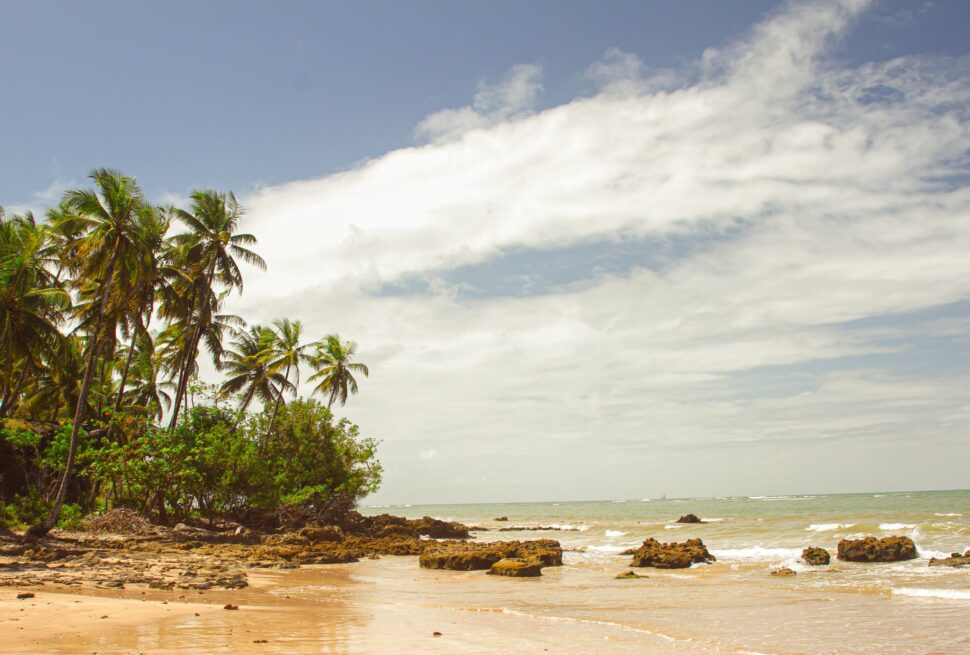
Of all Tanzania’s islands the most famous is Zanzibar. Zanzibar has mile upon mile of beautiful white coral sand beaches, palm trees and wonderful warm turquoise water. A word of caution though: the beaches of Zanzibar are extremely tidal. Though some beaches are superb, some are not. As a rule of thumb, the best beaches are in the North and the South-East.
The other two main islands are Pemba and Mafia. But, the beaches here are much less appealing than their Zanzibar counterparts. They are extremely tidal and are more mangrove beach than white coral sand.
Most island hotels offer a range of non-motorized water sports. These include diving, kite surfing, and snorkeling. Guests can enjoy these activities directly from the hotel, as at Ras Nungwi or Breezes. Alternatively, they can engage in these sports from a nearby privately-run dive center.
Finally, Tanzania has hundreds of miles of coastline extending all the way down to Mozambique. The coast remains gloriously undeveloped. The mainland coast lodges are thus much more private than the island lodges. They are also less tidal and are good for boogie-boarding, unlike the islands.
Where to stay
On Zanzibar at about the $200 mark, Pongwe and Sunshine are well-run small hotels with good beaches. At the same sort of price is the much bigger Breezes Beach Club. The next level up, at about $300, brings Zuri Zanzibar, Zawadi and Matemwe – all fantastic options. The top end of the scale sees many stunning options like Palms, Baraza, Xanadu and White Sands. At the very top end, you find Mnemba Island and Thanda Island, which are completely exclusive. For a slice of exclusivity without breaking the bank, see Fanjove.
Stone Town can be visited on a day trip from the beach. It takes about 1 hour. For those who want to stay overnight, there are several small boutique hotels. Our favourite is the Zanzibar Palace.
Off Zanzibar there is little choice. For Mafia Island, we recommend Kinasi Lodge (about $200). On Pemba, we recommend Fundu Lagoon (about $500). If money really is no object, then Mnemba island is the place to stay (about $1500). On the mainland, there are really only two choices. Our absolute favourite lodge is Ras Kutani (about $300). Further North near Bagamoyo, there is the Tides (about $250).
Why Nature Bound Africa?
Booking a holiday or honeymoon is a time-consuming task. It is confusing. It is vital to get the trip absolutely right. We believe the best way to achieve this is through a face to face presentation. We can arrange these presentations in the evenings and weekends. Nonetheless, for those unable to visit our offices in Arusha, Tanzania we now arrange ‘virtual presentations’. We ‘share’ our computer with you and guide you through all the areas, parks, and lodges. We use all the maps, slideshows, and video on our website. Otherwise we are always at the end of the phone!
Independent advice from experts
We really know our stuff. We have been arranging luxury travel to Africa since 2002, and we have close relationships with all the suppliers. We have stayed at all the lodges many times. This allows us to match an itinerary to your requirements very precisely. You have come across a fabulous lodge on Tripadvisor. If there’s a better one just round the corner, we will let you know. It can be more intimate, more authentic, or less expensive. And if anything goes wrong during your trip, we know who to call and how to get things sorted.
Independently owned and operated
We are not accountable to anybody but you. We don’t work on commission. Our only goal is to arrange the best possible trip for you within your budget. We also aim to guarantee that you have a wonderful time.
Your Money: Our price promise
Booking through us will not cost more than booking directly with individual suppliers. It often costs considerably less. We are able to negotiate excellent rates with suppliers, which results in savings for you. If you receive a cheaper quote for the same trip from a reputable tour operator, we will match it. We will match the price. The quote must be for the same trip. It must be of the same level of accommodation. Also, it must be from a reputable tour operator. We will match your quote against a cheaper offer. Still, this scenario is very unlikely to happen.
Financial protection We are ATOL so whatever might happen to us, your money is protected.
No surcharge for currency fluctuations. Once your trip is deposited, we guarantee that we will make no surcharge for currency fluctuations. This applies whatever happens to exchange rates before you actually travel.
In summary, we can package a holiday for less than you can arrange directly. There is no exchange risk. You will benefit from our decades of experience in arranging similar trips. You will also gain from our impartial opinions. Our ATOL bond offers financial security!
Ready to plan your Kenya or Tanzania safari?
Whether you’re looking for an affordable mid-range adventure, a luxury honeymoon, or a once-in-a-lifetime family holiday, Nature Bound Africa can design a safari tailored entirely to you.
Contact us today for a free personalized itinerary and no-obligation quote.
Speak with our safari experts: +255 784 737 413
Chat with us instantly on WhatsApp: +255 784 737 413
Go where you want. Travel when you want. Experience Africa your way.
When planning your trip, A Guide to Tanzania and Zanzibar Holiday should be your first resource. This A Guide to Tanzania and Zanzibar Holiday provides invaluable insights on the best places to visit, stay, and explore.
For those seeking adventure, A Guide to Tanzania and Zanzibar Holiday offers details on thrilling activities and experiences that highlight the beauty of Tanzania.
Don’t forget to consult A Guide to Tanzania and Zanzibar Holiday to tailor your itinerary to include both safari and beach experiences.
Every traveler should use A Guide to Tanzania and Zanzibar Holiday for personalized recommendations and tips for the best travel experiences.
A Guide to Tanzania and Zanzibar Holiday can also help you navigate local customs and etiquette to enhance your travel experience.
Consult A Guide to Tanzania and Zanzibar Holiday for easy planning of your dream getaway.
Travelers looking for unique experiences should refer to A Guide to Tanzania and Zanzibar Holiday for the best suggestions.
A Guide to Tanzania and Zanzibar Holiday emphasizes the importance of immersing yourself in the local culture.
To make the most of your trip, follow the advice in A Guide to Tanzania and Zanzibar Holiday for a seamless experience.
A Guide to Tanzania and Zanzibar Holiday can guide you in selecting the best time to visit based on climate and wildlife.
With A Guide to Tanzania and Zanzibar Holiday, every traveler can find recommendations tailored to their interests.
A Guide to Tanzania and Zanzibar Holiday also highlights eco-friendly lodges and activities for the environmentally conscious traveler.
For those seeking luxury, A Guide to Tanzania and Zanzibar Holiday offers insights into high-end accommodations and experiences.
A Guide to Tanzania and Zanzibar Holiday provides tips on how to make the most of your safari adventure.
Explore the hidden gems of Tanzania with A Guide to Tanzania and Zanzibar Holiday for an unforgettable experience.
Consult A Guide to Tanzania and Zanzibar Holiday for essential packing tips specific to the region.
Before traveling, refer to A Guide to Tanzania and Zanzibar Holiday for a checklist of important travel documents and requirements.
A Guide to Tanzania and Zanzibar Holiday can help you understand the local cuisine and dining options available.
Take advantage of the tips in A Guide to Tanzania and Zanzibar Holiday for navigating transportation options.
Experience the vibrant arts and crafts scene by following A Guide to Tanzania and Zanzibar Holiday.
Whether you’re an adventure seeker or a leisure traveler, A Guide to Tanzania and Zanzibar Holiday has something for everyone.
Get insights on the best local guides by referring to A Guide to Tanzania and Zanzibar Holiday.
Having A Guide to Tanzania and Zanzibar Holiday will ensure you don’t miss out on any must-see attractions.
Plan your travel itinerary with the help of A Guide to Tanzania and Zanzibar Holiday for a well-rounded adventure.
Discover unique cultural experiences by following A Guide to Tanzania and Zanzibar Holiday.
A Guide to Tanzania and Zanzibar Holiday will guide you to the best times for wildlife sightings.
Make your travel experience unforgettable with insights from A Guide to Tanzania and Zanzibar Holiday.
A Guide to Tanzania and Zanzibar Holiday can enrich your understanding of local traditions and practices.
For a comprehensive view of Tanzania and Zanzibar, rely on A Guide to Tanzania and Zanzibar Holiday.
Utilize A Guide to Tanzania and Zanzibar Holiday for planning your dream safari and beach getaway.
Immerse yourself in the adventure of a lifetime with A Guide to Tanzania and Zanzibar Holiday.
Finally, all your travel questions can be answered with A Guide to Tanzania and Zanzibar Holiday.
In conclusion, A Guide to Tanzania and Zanzibar Holiday is essential for any traveler looking to explore the region.